
In the process of designing a garment, small logistical details like the care label often end up being rushed and disregarded as an afterthought. At Witek, however, every little detail adds up. In creating a true 100% made-in-USA garment, no detail can be overlooked and that includes the care label. Our labels are made truly 100% in USA from their humble beginnings as a cotton seed, and contain 60 times less plastic than the labels on a typical fast fashion sweater. To illustrate the difference it makes, let’s follow two garment labels through their lifespan from beginning to end in: A Tale of Two Labels.
Label 1: Fast Sweater, Inc.
The antagonist in our story is Fast Sweater, Inc, or FSI. FSI is a fast fashion house and needs thousands of labels for a new sweater model, one of thousands they will introduce this year. In total, FSI will create ten million sweaters this year alone. For this model, they put in an order for 30,000 labels with a manufacturer in China or Bangladesh who uses a room full of precision weaving machines to weave hundreds of labels at once, with each label taking under a second to complete. The engineer in me is in awe at the speed and precision of these machines and I highly recommend you watch them in action here. These machines operate at speeds of 600RPM, about as fast as a car wheel spins driving at 45mph. Because of this high speed, natural fibers are rarely used on these machines as they lack the tensile uniformity and smoothness that high-speed weaving demands.. These machines necessitate the use of synthetic fibers which can be made to be completely smooth, low friction, and ultra strong under tensile loads. For a large buyer like FSI placing massive orders with large negotiated contracts and significant market sway, each label can cost less than a penny.
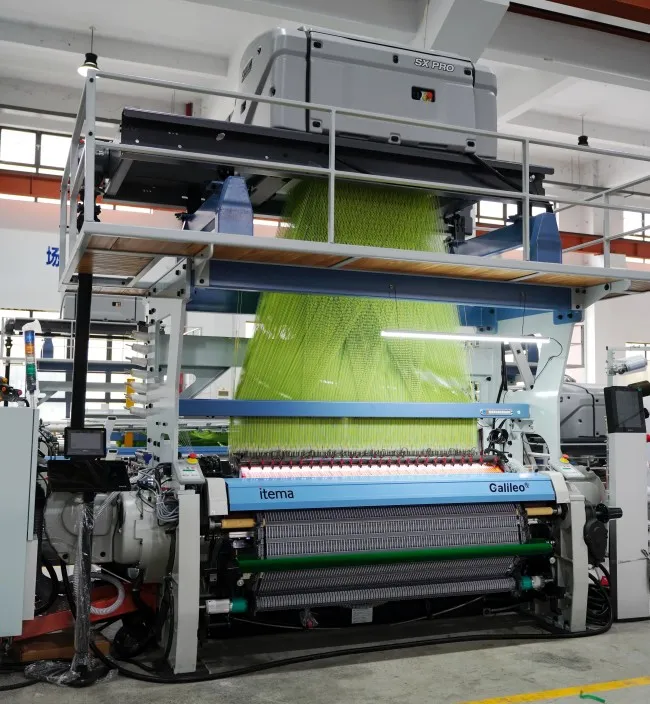
A Credit Ocean label weaving machine in operation.
Surely this is just technology and market efficiency solving the problem, right? FSI gets any quantity of labels it needs at the cheapest possible price. The invisible hand in action. However, the true environmental cost of this production is significant and largely invisible. Each label may be small- maybe only one or two grams- but this adds up fast. And for a garment destined for an international market, a garment might not need just one but several of these labels to comply with regulations across countries. As an international retailer, a single sweater from FSI might have 3-5 of these 1-2 gram labels, anywhere between 3 to 10 grams of plastic on what might be advertised as a 100% wool product. As a smaller player in the fast fashion industry, FSI produces just 10 million sweaters in a year. 10M sweaters × 3–5 labels × 1–2g = 30,000–100,000 kg of plastic waste per year just on garment labels. For perspective, 100,000kg is roughly the weight of 75 standard sedans. Larger fast fashion houses might do 5-10 times that amount. And this is true waste: these labels are redundant and will almost surely be ignored by the wearer, only thought of for the 15 seconds it scratches against your skin before you quickly cut it off and throw it away for it to find a new home in a landfill for the next 200 years as it disintegrates into microplastics- never truly decomposing, just getting smaller. Now, we contrast this with the tale of label two.
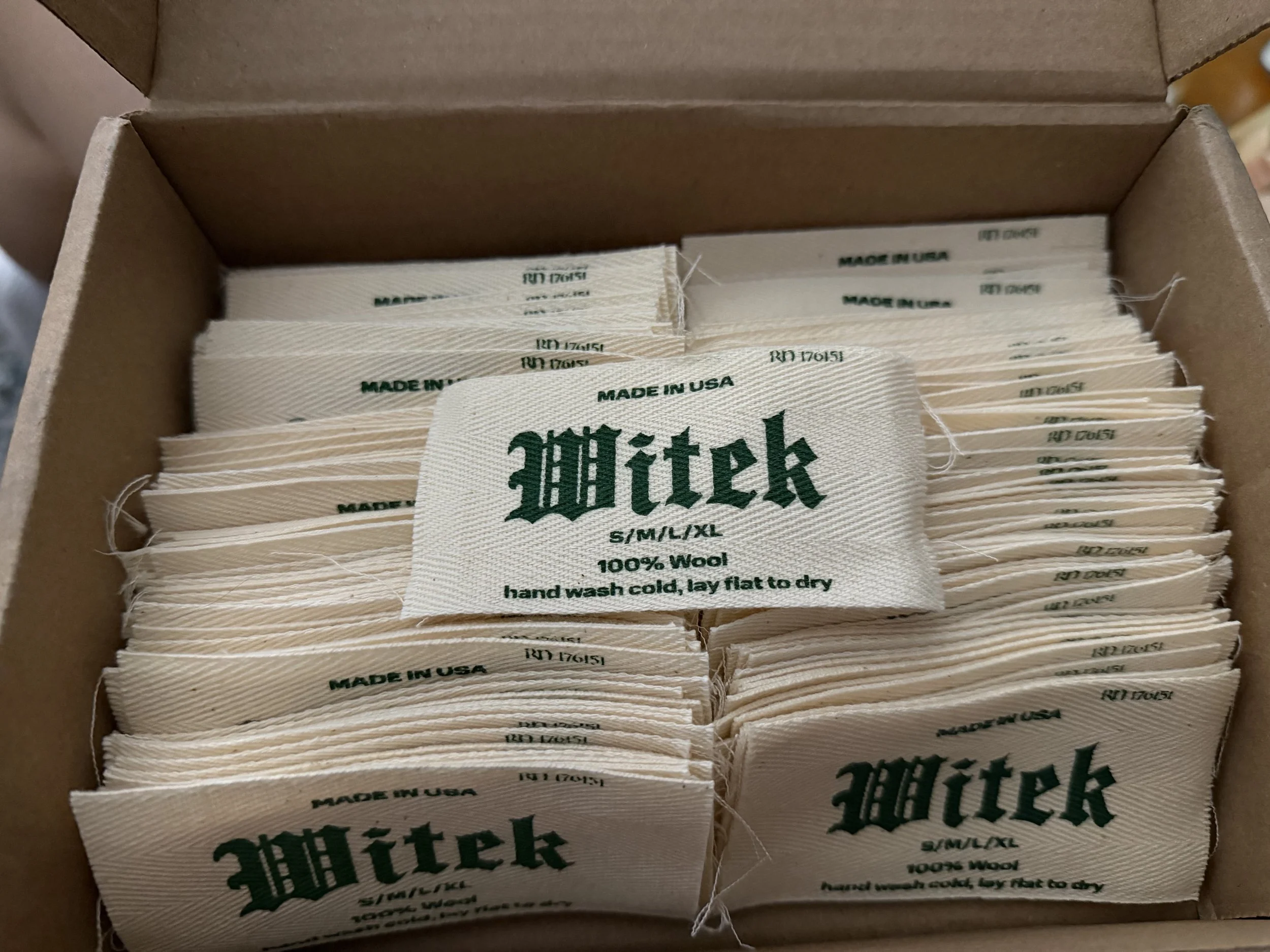
Witek Clothing Labels. Design courtesy of my wickedly talented brother, Alex.
Label 2: Witek Clothing
Our labels start their lives on organic farms in the southern United States. This cotton is spun into fine thread before being sent up to Wayne Mills in Philadelphia. Wayne Mills is a fifth-generation family-owned textile mill specializing in (among other things), twill tape. Their team of skilled manufacturers weave the raw thread into a fine twill tape. From there, the twill arrives at Bushwick Print Labs in Brooklyn for screen printing and cutting. Ray, the founder and master printmaker at BPL has over 30 years of experience in printmaking, and operates the lab not just as a business but as a community space with equipment and studio space rentals and printmaking workshops. Each of our labels weighs less than a gram and contains roughly 0.05 grams of acrylic ink, the only synthetic material used in the entire garment and 60-200x less plastic than the labels used in a traditional fast fashion garment. When a Witek garment finally reaches the end of a long life of being worn, loved, and repaired many times over, its cotton label will decompose in months. The small amount of acrylic ink will linger longer, but it represents a fraction of the microplastic load of a conventional label. It’s not perfect, but we're always looking to close the gap. We're actively exploring natural-dye printing and woven alternatives that would make our labels fully biodegradable, and we'll be sure to update you when we get there.
Yours Woolly,
Will Witek
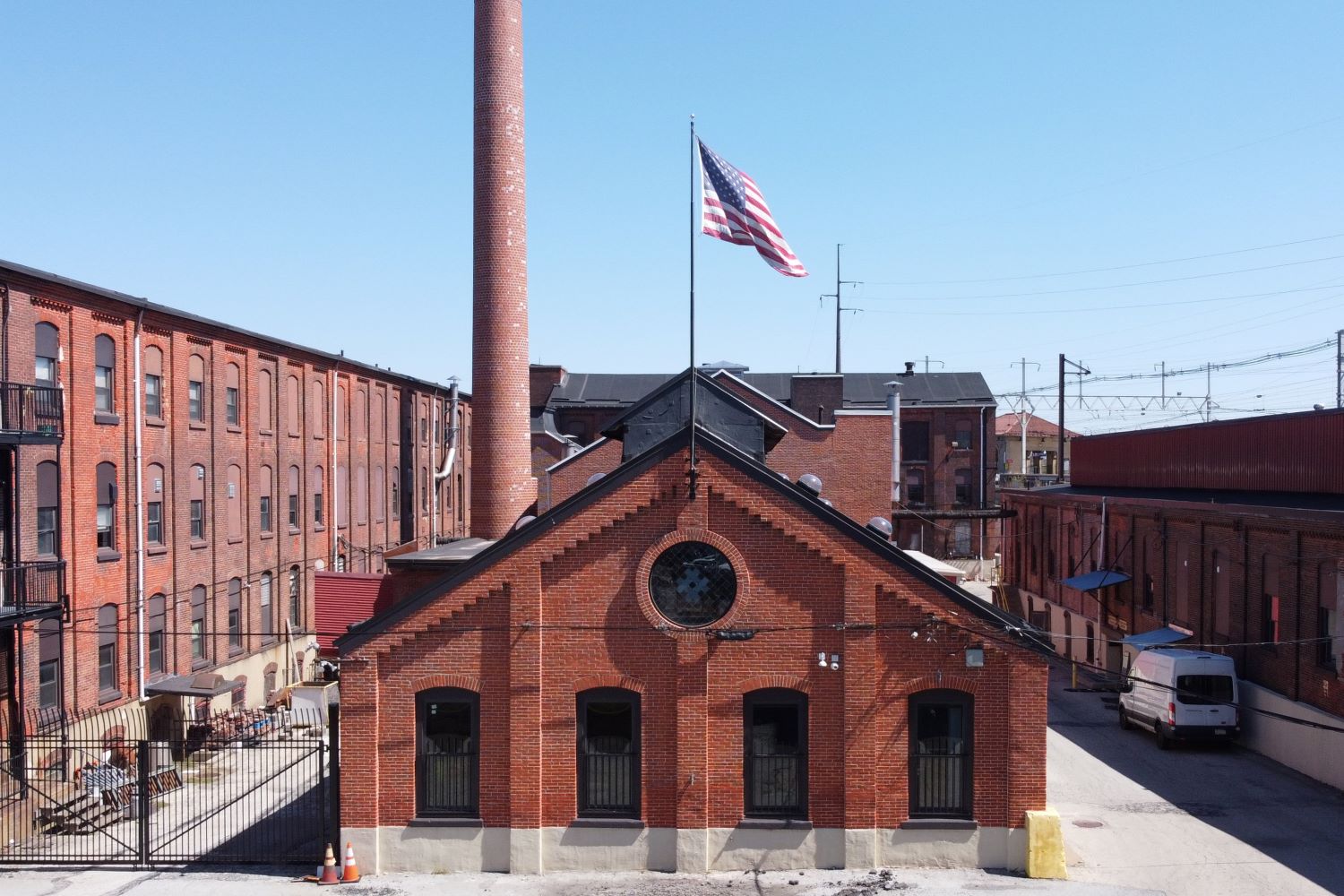
The dye house at Wayne Mills in Philadelphia, PA. Photo courtesy of Wayne Mills.
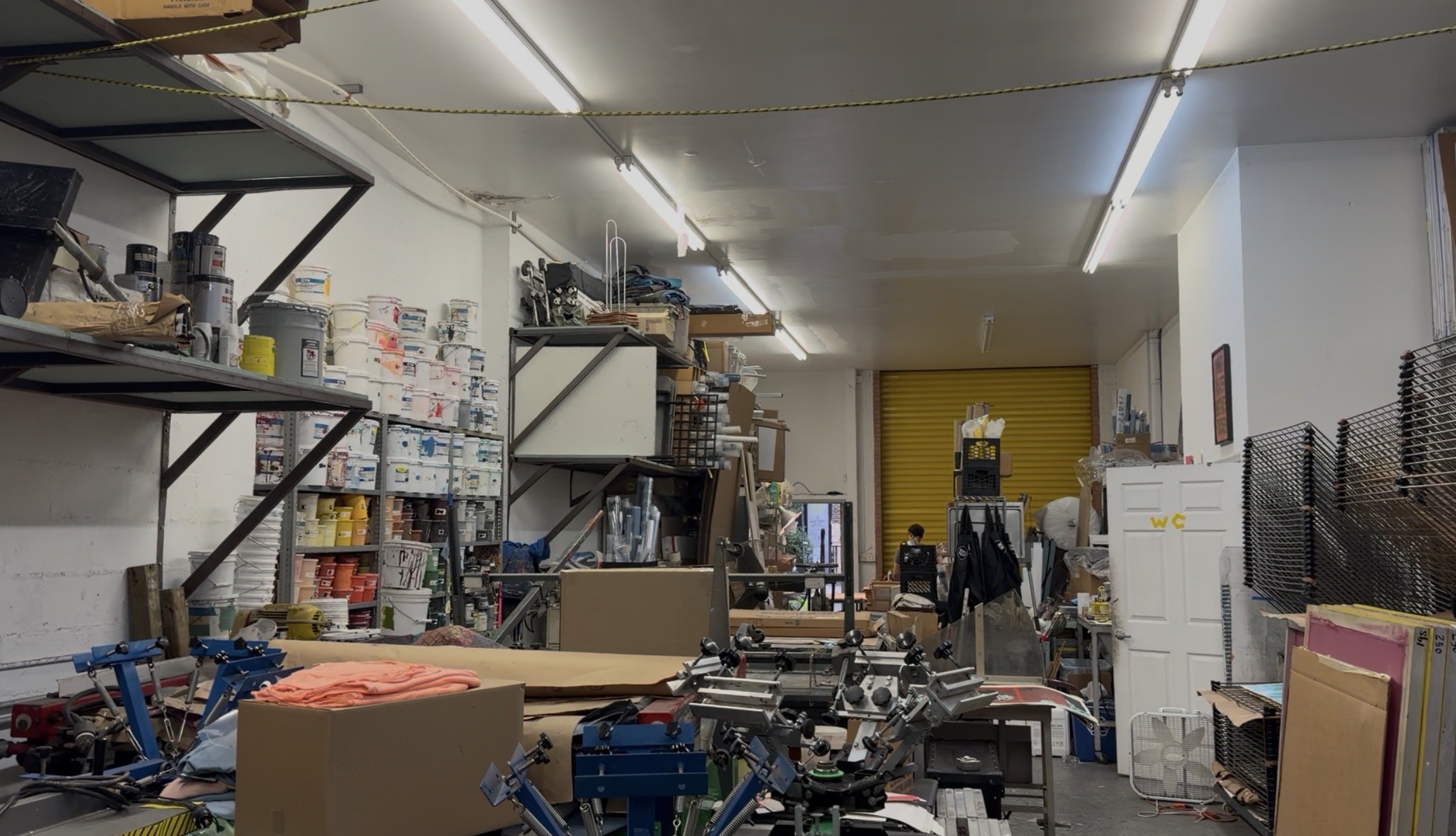
Bushwick Print Labs in Brooklyn, NY. Ray hard at work in the background.
